

Clinically validated in the largest real-world study of GEP testing in melanoma
[.underline-move-left]Recent data[.underline-move-left] from an ongoing collaboration with the National Cancer Institute’s Surveillance, Epidemiology and End Results (SEER) Program show that DecisionDx-Melanoma testing was associated with lower melanoma-specific and overall mortality compared to untested patients. The study confirms DecisionDx-Melanoma delivers significant, independent risk stratification beyond AJCC8 staging.1
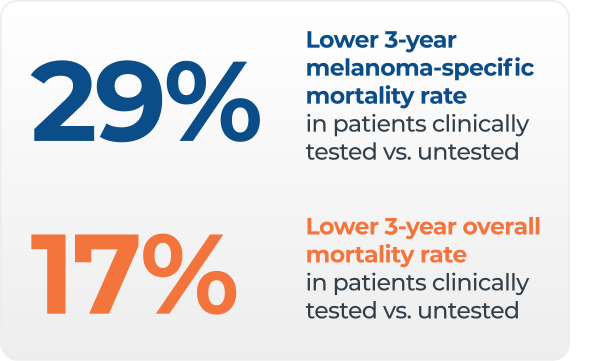
Independently validated. Clinically tested.
If you're going to use a GEP test in clinical practice, it's critical to ensure that the test provides clear, independent value beyond what's already freely and readily available to you today—namely, American Joint Committee on Cancer (AJCC) staging.
DecisionDx-Melanoma has nine peer-reviewed studies demonstrating consistent, independent performance – no other GEP test in melanoma has such evidence.

DecisionDx-Melanoma provides better risk stratification for patients with T1b-t2a tumors
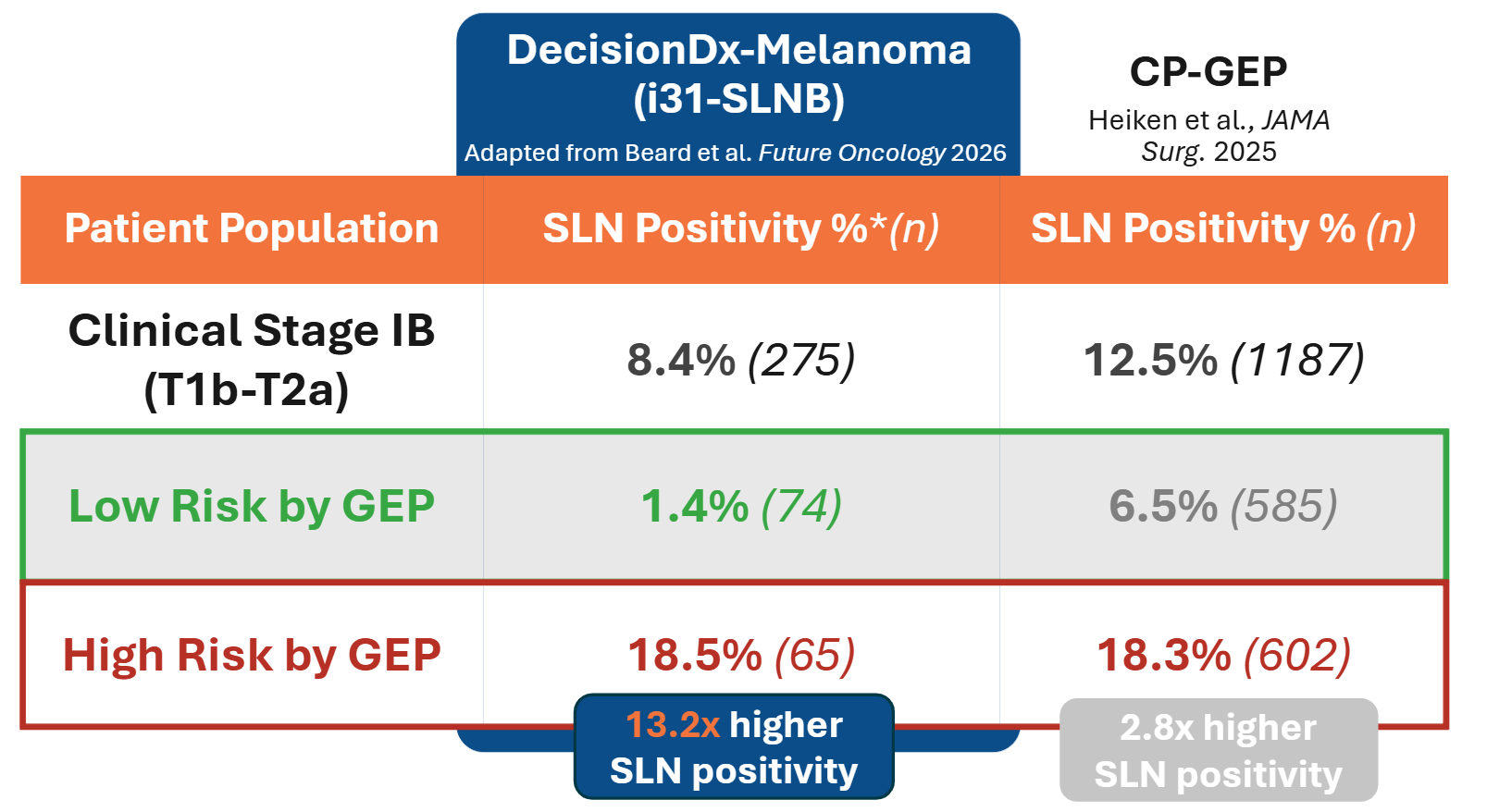
A subset of the prospective, multicenter DECIDE study patients with Stage IB (T1b-T2a) disease demonstrates that DecisionDx-Melanoma can:
- Low-risk patients well below the 5% NCCN low-risk threshold
- High-risk patients who are 13x more likely to be SLN-positive
In contrast, when it comes to CP-GEP, a low-risk result corresponds to a 5-10% risk threshold. Therefore, all patients should still be advised to "discuss and consider" the SLNB prodecure.4
*Low risk for DecisionDx-Melanoma defined as <5% i31-SLNB result & high risk defined as ≥10%
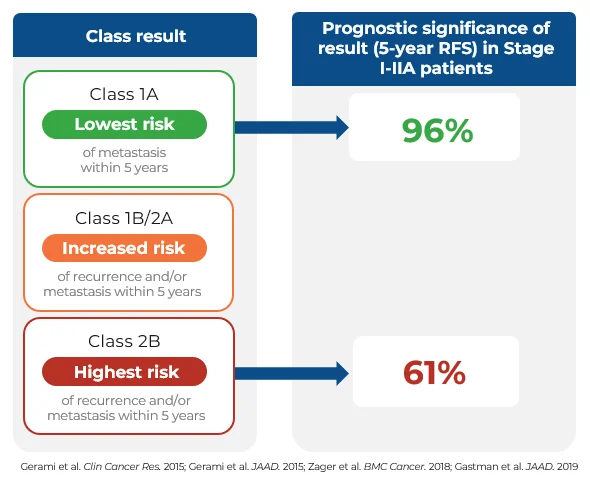
DecisionDx-Melanoma provides significant risk-stratification to inform management decisions
The visual on the right highlights the meaningful risk stratification between a Class 1A (lowest risk) and Class 2B (highest risk) DecisionDx-Melanoma result.
How does DecisionDx-Melanoma compare to other GEP tests?
Other GEP tests report a 74% recurrence-free survival (RFS) rate in their high-risk category, while reporting an 89% RFS in their low-risk population9. Notably, an 89% RFS is a threshold many oncologists would still consider the risk significant enough to warrant adjuvant therapy.10
Expert Insights: Discover why Shannon Trotter, DO, FAOCD, FAAD, chooses DecisionDx-Melanoma and how it enhances patient management
Castle Biosciences: The leader in melanoma prognostic testing leader with independent, robust validation and real-world results

*Numbers as of May 2025


