

Case Study

Can this patient avoid high-intensity treatment?

A 70-year-old male presented with malignant melanoma on his lateral left calf. With current guidelines, he was recommended to have a sentinel lymph node biopsy (SLNB) performed.

Case details

  • Malignant melanoma
  • 1.5 mm Breslow thickness
  • No ulceration
  • Mitotic rate: 3-4/mm2
  • 1x1.4 cm pigment at one edge
  • Stage: pT2a
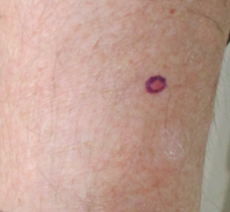
Close-up of skin with a small circular mark outlined in purple ink.

Based on AJCC staging and NCCN guidelines

DecisionDx-Melanoma was immediately ordered after diagnosis because of the workflow implemented in the physician’s practice.


Why DecisionDx-Melanoma?

Based on published data, the physician implemented a policy in her practice to order DecisionDx-Melanoma on any patient with a Breslow’s thickness over 0.3 mm in patients 65 and older.

Test result and impact to care

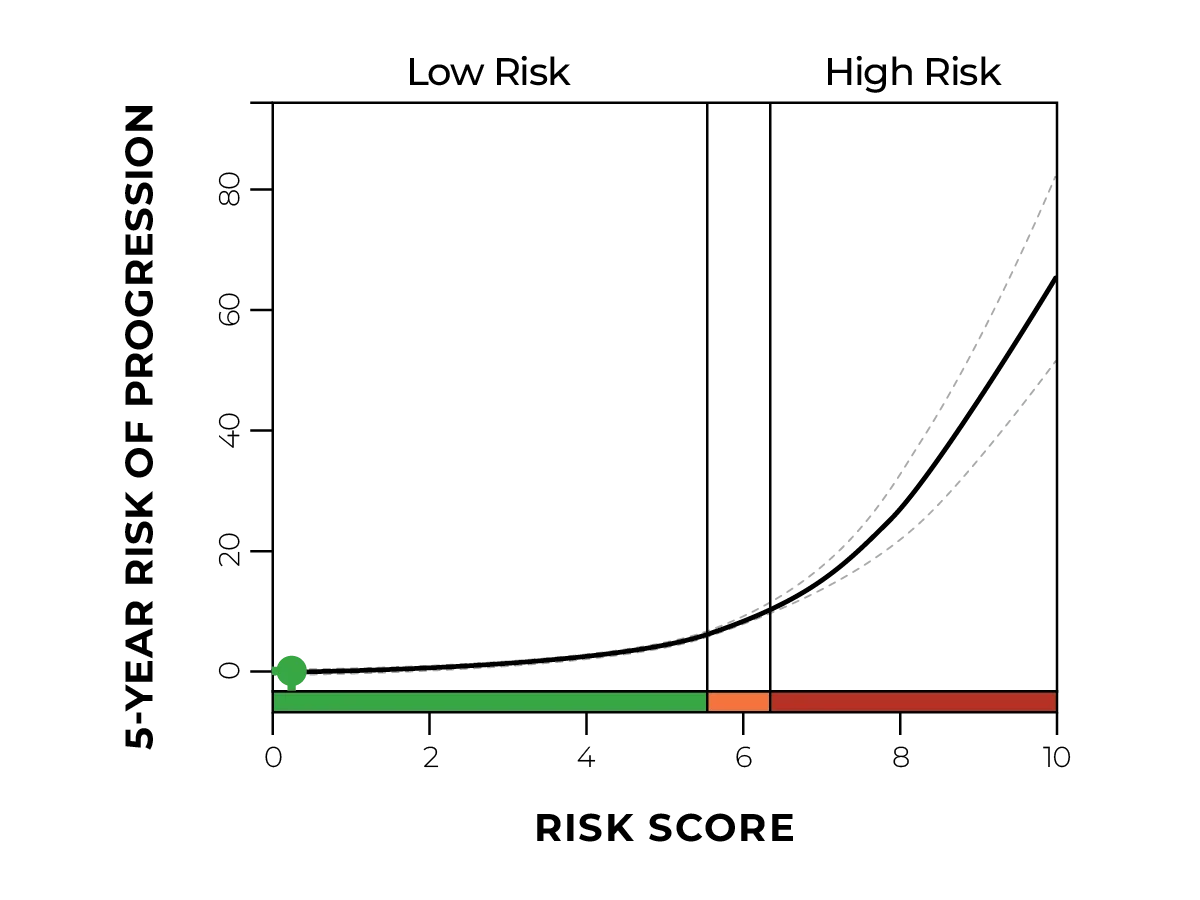
DecisionDx-Melanoma test result of Class 1A indicated the lowest risk. The patient had a wide local excision performed and did not have a SLNB. The dermatologist followed the patient in her clinic and did not conduct any additional imaging.


Green banner with white text reading Class 1A Lowest risk and a 1A symbol on an orange background.

The dermatologist continues to see the patient on a quarterly basis, and at two years out the patient has had no events.

Minimalist smiley face with two small orange eyes and one large orange mouth dot on white background.

By incorporating the Class 1A result, the patient was placed on a lower-intensity treatment plan.


Case Study

Can this patient avoid high-intensity treatment?

A 70-year-old male presented with malignant melanoma on his lateral left calf. With current guidelines, he was recommended to have a sentinel lymph node biopsy (SLNB) performed.

Case details

  • Malignant melanoma
  • 1.5 mm Breslow thickness
  • No ulceration
  • Mitotic rate: 3-4/mm2
  • 1x1.4 cm pigment at one edge
  • Stage: pT2a
Close-up of skin with a small circular mark outlined in purple ink.

Based on AJCC staging and NCCN guidelines

DecisionDx-Melanoma was immediately ordered after diagnosis because of the workflow implemented in the physician’s practice.


Why DecisionDx-Melanoma?

Based on published data, the physician implemented a policy in her practice to order DecisionDx-Melanoma on any patient with a Breslow’s thickness over 0.3 mm in patients 65 and older.

Test result and impact to care

DecisionDx-Melanoma test result of Class 1A indicated the lowest risk. The patient had a wide local excision performed and did not have a SLNB. The dermatologist followed the patient in her clinic and did not conduct any additional imaging.

Green banner with white text reading Class 1A Lowest risk and a 1A symbol on an orange background.

The dermatologist continues to see the patient on a quarterly basis, and at two years out the patient has had no events.

Minimalist smiley face with two small orange eyes and one large orange mouth dot on white background.

By incorporating the Class 1A result, the patient was placed on a lower-intensity treatment plan.

Case Study

Can this patient avoid high-intensity treatment?

A 70-year-old male presented with malignant melanoma on his lateral left calf. With current guidelines, he was recommended to have a sentinel lymph node biopsy (SLNB) performed.

Case details

  • Malignant melanoma
  • 1.5 mm Breslow thickness
  • No ulceration
  • Mitotic rate: 3-4/mm2
  • 1x1.4 cm pigment at one edge
  • Stage: pT2a
Close-up of skin with a small circular mark outlined in purple ink.

Based on AJCC staging and NCCN guidelines

DecisionDx-Melanoma was immediately ordered after diagnosis because of the workflow implemented in the physician’s practice.


Why DecisionDx-Melanoma?

Based on published data, the physician implemented a policy in her practice to order DecisionDx-Melanoma on any patient with a Breslow’s thickness over 0.3 mm in patients 65 and older.

Test result and impact to care

DecisionDx-Melanoma test result of Class 1A indicated the lowest risk. The patient had a wide local excision performed and did not have a SLNB. The dermatologist followed the patient in her clinic and did not conduct any additional imaging.

Green banner with white text reading Class 1A Lowest risk and a 1A symbol on an orange background.

The dermatologist continues to see the patient on a quarterly basis, and at two years out the patient has had no events.

Minimalist smiley face with two small orange eyes and one large orange mouth dot on white background.

By incorporating the Class 1A result, the patient was placed on a lower-intensity treatment plan.

Blue gradient background with vertical rounded lines in varying shades of blue scattered across the right side.
Bearded man with glasses in blue blazer and shirt speaking in front of a blurred abstract painting.

Can this patient avoid high-intensity treatment?

Can this patient avoid high-intensity treatment?

A 70-year-old male presented with malignant melanoma on his lateral left calf. With current guidelines, he was recommended to have a sentinel lymph node biopsy (SLNB) performed.

Patient Presentation
  • Malignant melanoma
  • 1.5 mm Breslow thickness
  • No ulceration
  • Mitotic rate: 3-4/mm2
  • 1x1.4 cm pigment at one edge
  • Stage: pT2a
Close-up of skin with a small circular mark outlined in purple ink.
Management Plan

Based on AJCC staging and NCCN guidelines

DecisionDx-Melanoma was immediately ordered after diagnosis because of the workflow implemented in the physician’s practice.