

Case Study

Can this patient avoid further treatment?

A 72-year-old Caucasian male presents with primary SCC of the central forehead.

Case details

The patient's lesion, located on his forehead, was 2.8 x 1.5 cm. The patient has type 2 diabetes, hypertension, renal cell carcinoma s/p right nephrectomy.

  • Post-operative adjuvant radiation therapy.

Why DecisionDx-SCC?

Post-operative radiation therapy considered due to the high-risk features of large size and tumor depth> 4 mm. The patient wished to avoid further treatment if possible.

Test result

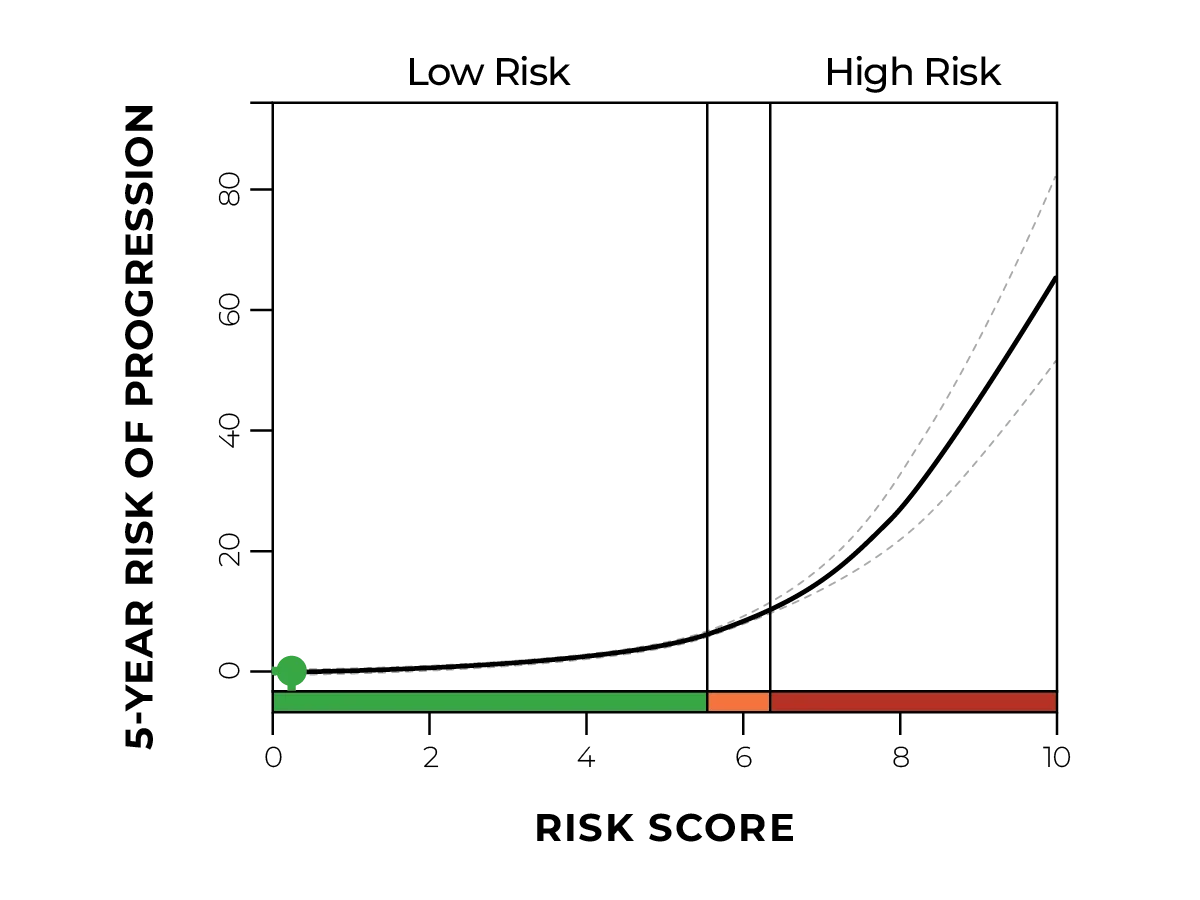
In this patient, the DecisionDx-SCC test result of Class 2A indicates a higher biological risk for metastasis (38.6%). This assisted the clinician in deciding to proceed with the treatment pathway – ART treatment 5 months post-initial surgery to decrease chance of recurrence or metastasis.


Class 2A: higher biological risk for metastasis, BWH T2b Class 2A equals 38.6%

The DecisionDx-SCC test result of Class 2A indicates a higher biological risk for metastasis (38.6%). This assisted the clinician in deciding to proceed with the treatment pathway – ART treatment 5 months post-initial surgery to decrease chance of recurrence or metastasis.

DecisionDx-SCC testing provided valuable objective information and helped determined that the patient should proceed with the ART treatment.


Case Study

Can this patient avoid further treatment?

A 72-year-old Caucasian male presents with primary SCC of the central forehead.

Case details

The patient's lesion, located on his forehead, was 2.8 x 1.5 cm. The patient has type 2 diabetes, hypertension, renal cell carcinoma s/p right nephrectomy.

  • Post-operative adjuvant radiation therapy.

Why DecisionDx-SCC?

Post-operative radiation therapy considered due to the high-risk features of large size and tumor depth> 4 mm. The patient wished to avoid further treatment if possible.

Test result

In this patient, the DecisionDx-SCC test result of Class 2A indicates a higher biological risk for metastasis (38.6%). This assisted the clinician in deciding to proceed with the treatment pathway – ART treatment 5 months post-initial surgery to decrease chance of recurrence or metastasis.

Class 2A: higher biological risk for metastasis, BWH T2b Class 2A equals 38.6%

The DecisionDx-SCC test result of Class 2A indicates a higher biological risk for metastasis (38.6%). This assisted the clinician in deciding to proceed with the treatment pathway – ART treatment 5 months post-initial surgery to decrease chance of recurrence or metastasis.

DecisionDx-SCC testing provided valuable objective information and helped determined that the patient should proceed with the ART treatment.

Case Study

Can this patient avoid further treatment?

A 72-year-old Caucasian male presents with primary SCC of the central forehead.

Case details

The patient's lesion, located on his forehead, was 2.8 x 1.5 cm. The patient has type 2 diabetes, hypertension, renal cell carcinoma s/p right nephrectomy.

  • Post-operative adjuvant radiation therapy.

Why DecisionDx-SCC?

Post-operative radiation therapy considered due to the high-risk features of large size and tumor depth> 4 mm. The patient wished to avoid further treatment if possible.

Test result

In this patient, the DecisionDx-SCC test result of Class 2A indicates a higher biological risk for metastasis (38.6%). This assisted the clinician in deciding to proceed with the treatment pathway – ART treatment 5 months post-initial surgery to decrease chance of recurrence or metastasis.

Class 2A: higher biological risk for metastasis, BWH T2b Class 2A equals 38.6%

The DecisionDx-SCC test result of Class 2A indicates a higher biological risk for metastasis (38.6%). This assisted the clinician in deciding to proceed with the treatment pathway – ART treatment 5 months post-initial surgery to decrease chance of recurrence or metastasis.

DecisionDx-SCC testing provided valuable objective information and helped determined that the patient should proceed with the ART treatment.

Blue gradient background with vertical rounded lines in varying shades of blue scattered across the right side.
Bearded man with glasses in blue blazer and shirt speaking in front of a blurred abstract painting.

A 72-year old caucasian male presents with primary SCC of the central forehead

Can this patient avoid further treatment?

A 72-year-old Caucasian male presents with primary SCC of the central forehead.

Patient Presentation

The patient's lesion, located on his forehead, was 2.8 x 1.5 cm. The patient has type 2 diabetes, hypertension, renal cell carcinoma s/p right nephrectomy.

Management Plan
  • Post-operative adjuvant radiation therapy.