Case Study

A 72-year-old patient presented to Dr. Khara for follow-up management of GERD and non-dysplastic Barrett’s esophagus (NDBE). Although his clinical profile appeared to be low risk, he was interested in proactively treating his Barrett’s esophagus (BE) by way of endoscopic eradication therapy (EET). Dr. Khara utilized an elevated TissueCypher risk score to support the decision of escalation.

“The patient was successfully treated with endoscopiceradication therapy and this way, he did not have to worry about ongoing surveillance on something that could become cancer.”

‍

Case details

  • No relevant family history
  • Chronic GERD for 10 years, on PPIs
  • Smoker, a pack-per-day for 24 years
  • Follow-up for GERD andBE
Case Study

A 72-year-old patient presented to Dr. Khara for follow-up management of GERD and non-dysplastic Barrett’s esophagus (NDBE). Although his clinical profile appeared to be low risk, he was interested in proactively treating his Barrett’s esophagus (BE) by way of endoscopic eradication therapy (EET). Dr. Khara utilized an elevated TissueCypher risk score to support the decision of escalation.

“The patient was successfully treated with endoscopiceradication therapy and this way, he did not have to worry about ongoing surveillance on something that could become cancer.”

‍

Case details

  • No relevant family history
  • Chronic GERD for 10 years, on PPIs
  • Smoker, a pack-per-day for 24 years
  • Follow-up for GERD andBE

Case Study

A 72-year-old patient presented to Dr. Khara for follow-up management of GERD and non-dysplastic Barrett’s esophagus (NDBE). Although his clinical profile appeared to be low risk, he was interested in proactively treating his Barrett’s esophagus (BE) by way of endoscopic eradication therapy (EET). Dr. Khara utilized an elevated TissueCypher risk score to support the decision of escalation.

“The patient was successfully treated with endoscopiceradication therapy and this way, he did not have to worry about ongoing surveillance on something that could become cancer.”

‍

Case details

  • No relevant family history
  • Chronic GERD for 10 years, on PPIs
  • Smoker, a pack-per-day for 24 years
  • Follow-up for GERD andBE
Blue gradient background with vertical rounded lines in varying shades of blue scattered across the right side.
Dr. Khara: Case 3
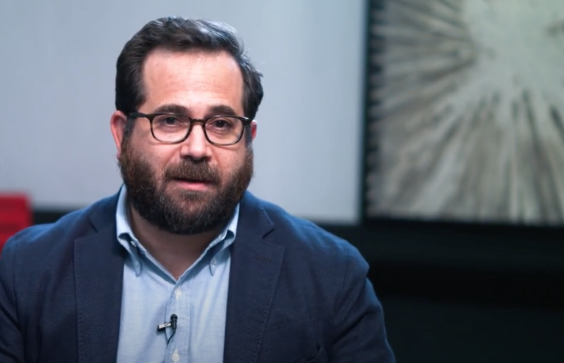
Bearded man with glasses in blue blazer and shirt speaking in front of a blurred abstract painting.

Care escalated in a clinically low-risk patient

A 72-year-old patient presented to Dr. Khara for follow-up management of GERD and non-dysplastic Barrett’s esophagus (NDBE). Although his clinical profile appeared to be low risk, he was interested in proactively treating his Barrett’s esophagus (BE) by way of endoscopic eradication therapy (EET). Dr. Khara utilized an elevated TissueCypher risk score to support the decision of escalation.

“The patient was successfully treated with endoscopiceradication therapy and this way, he did not have to worry about ongoing surveillance on something that could become cancer.”

‍

Clinical risk factors

A 72-year-old, white, male patient with a history of chronic GERD is interested in proactively eradicating his Barrett’s despite non-dysplastic histology

RELEVANT MEDICAL HISTORY
  • No relevant family history
  • Chronic GERD for 10 years, on PPIs
  • Smoker, a pack-per-day for 24 years
ADDITIONAL CONSIDERATIONS
  • Follow-up for GERD andBE

Endoscopic findings

The endoscopy confirmed the presence of long-segment NDBE.

 Lower esophagus:

  • Barrett’s segment length: C4M5
  • Pathology returned NDBE
  • WATS3D returned NDBE

Traditional Management:

  • Treatment recommendation: 3-year surveillance

TissueCypher results

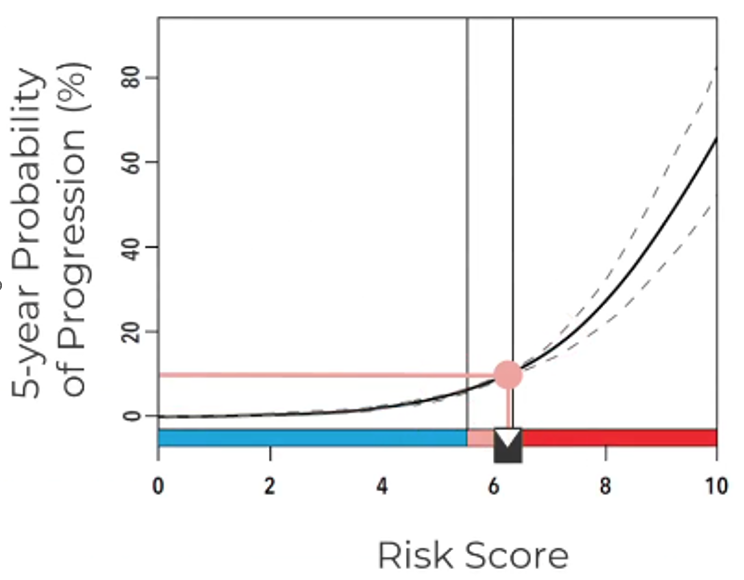
Dr. Khara found the patient’s intermediate-risk TissueCypherscore valuable in supporting the decision to escalate care from routine surveillance to EET.


  • Risk class: Intermediate‍
  • Risk score: 6.3‍
  • 5-year probability of progression: 10%

TissueCypher-guided management

  • Escalated to EET

“At a 10% probability of progression, he was definitely at a higher risk than patients with dysplastic Barrett’s, and that convinced me enough and gave us a reason to offer him ablation.”

Harshit Khara, MD