

Case Study

A health-conscious 31-year-old male sought evaluation for longstanding GERD and was initially diagnosed with long-segment non-dysplastic Barrett’s esophagus (NDBE), which caused him significant anxiety. Seeking clarity and potential treatment options, he was referred to Dr. Muthusamy, where repeat evaluation confirmed NDBE and a hiatal hernia. TissueCypher was used to better assess his personalized risk of progression, and the resulting low-risk score provided reassurance to both the patient and physician.

Case details

  • No relevant family history
  • Chronic GERD, PPI use
  • No obesity  
  • Non-smoker
  • None
Case Study

A health-conscious 31-year-old male sought evaluation for longstanding GERD and was initially diagnosed with long-segment non-dysplastic Barrett’s esophagus (NDBE), which caused him significant anxiety. Seeking clarity and potential treatment options, he was referred to Dr. Muthusamy, where repeat evaluation confirmed NDBE and a hiatal hernia. TissueCypher was used to better assess his personalized risk of progression, and the resulting low-risk score provided reassurance to both the patient and physician.

Case details

  • No relevant family history
  • Chronic GERD, PPI use
  • No obesity  
  • Non-smoker
  • None
Case Study

A health-conscious 31-year-old male sought evaluation for longstanding GERD and was initially diagnosed with long-segment non-dysplastic Barrett’s esophagus (NDBE), which caused him significant anxiety. Seeking clarity and potential treatment options, he was referred to Dr. Muthusamy, where repeat evaluation confirmed NDBE and a hiatal hernia. TissueCypher was used to better assess his personalized risk of progression, and the resulting low-risk score provided reassurance to both the patient and physician.

Case details

  • No relevant family history
  • Chronic GERD, PPI use
  • No obesity  
  • Non-smoker
  • None
Blue gradient background with vertical rounded lines in varying shades of blue scattered across the right side.
Dr. Ramen Muthusamy: Case 2
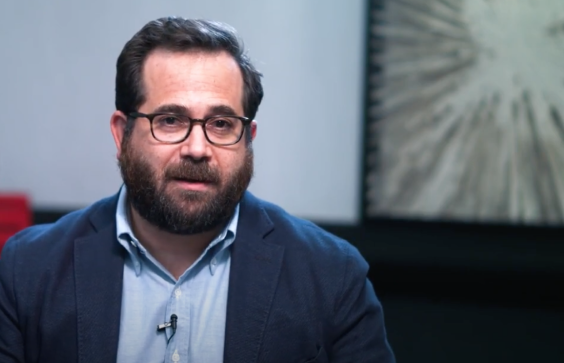
Bearded man with glasses in blue blazer and shirt speaking in front of a blurred abstract painting.

Reassuring an anxious patient

A health-conscious 31-year-old male sought evaluation for longstanding GERD and was initially diagnosed with long-segment non-dysplastic Barrett’s esophagus (NDBE), which caused him significant anxiety. Seeking clarity and potential treatment options, he was referred to Dr. Muthusamy, where repeat evaluation confirmed NDBE and a hiatal hernia. TissueCypher was used to better assess his personalized risk of progression, and the resulting low-risk score provided reassurance to both the patient and physician.

Clinical risk factors

A health-conscious 31-year-old, white, male and retired semi-professional tennis player developed anxiety about his Barrett’s diagnosis after his index endoscopy. He was referred to Dr. Muthusamy for consultation about possible eradication.

RELEVANT MEDICAL HISTORY
  • No relevant family history
  • Chronic GERD, PPI use
  • No obesity  
  • Non-smoker

Endoscopic findings

The endoscopy confirmed the presence of long-segment, NDBE and a hiatal hernia.

Lower esophagus:

  • Barrett’s segment length: C4M5
  • 4 cm hiatal hernia
  • Pathology returned NDBE
  • WATS3D returned NDBE

Traditional Management:

  • Treatment recommendation: 3-year surveillance

TissueCypher results

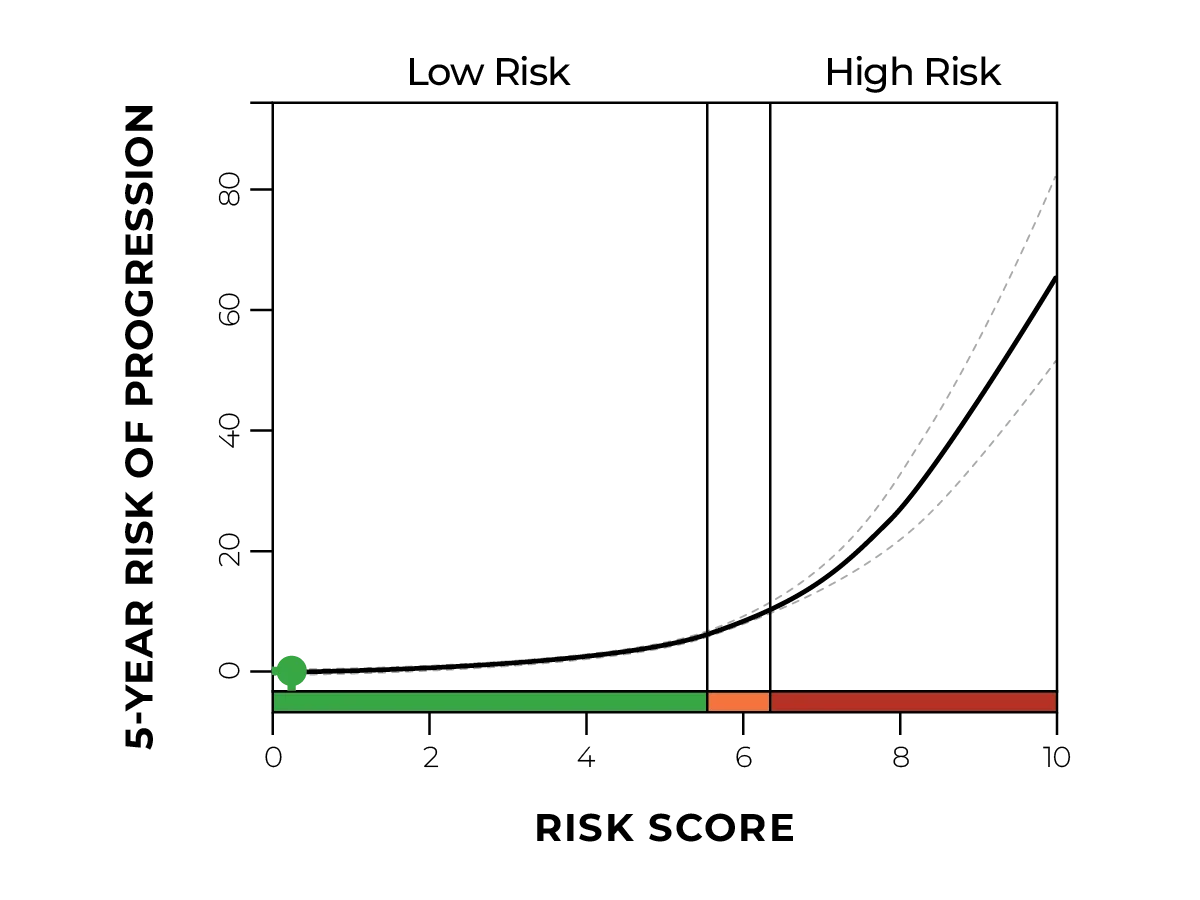
The patient was reassured after receiving a low-risk TissueCypher score and then agreed to a 3-year surveillance interval.

  • Risk class: Low
  • Risk score: 2.2
  • 5-year probability of progression: 0.9%  

TissueCypher-guided management

  • Maintain 3-year surveillance

Part of the role here is to not just provide a rationale but really make the patient comfortable with [the clinical decision].”

Ramen Muthusamy, MD