


Blue gradient background with vertical rounded lines in varying shades of blue scattered across the right side.
Cases with Raman Muthusamy, MD
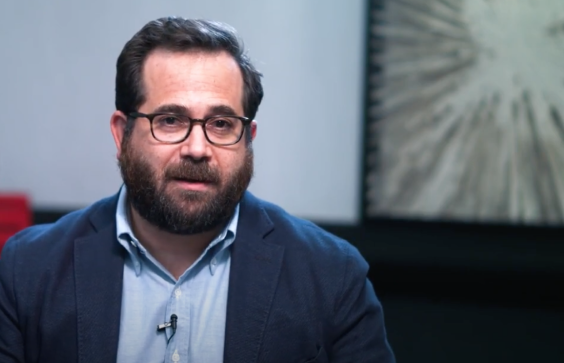
Bearded man with glasses in blue blazer and shirt speaking in front of a blurred abstract painting.

TissueCypher Case Studies: Dr. Raman Muthusamy

Dr. Raman Muthusamy is the medical director of endoscopy for the UCLA Health System. He is also an advanced endoscopist and clinical professor of medicine at the David Geffen School of Medicine at UCLA. He has a particular interest in Barrett’s esophagus and is deeply committed to education, mentorship, and improving patient outcomes.  

Dr. Muthusamy helped coin the term “Barrett’s conundrum,” which contrasts the availability of highly effective treatments for high-risk Barrett’s esophagus with the difficulty in identifying which patients are at the highest risk. He is passionate about innovative tools like TissueCypher that can help personalize medicine and provide clarity for patients.

Dr. Muthusamy shares 2 cases where TissueCypher informed his treatment decisions and helped reassure patients about their individual risk of progression.

See Dr. Muthusamy’s cases below.

See Dr. Muthusamy's TissueCypher case studies

Visually low-risk, biologically high-risk

This case involves a 52-year-old patient with long-segment, non-dysplastic Barrett’s esophagus (NDBE) and low-grade esophagitis. His clinical and histologic characteristics suggested the patient was low-risk for progression to high-grade dysplasia (HGD) or esophageal adenocarcinoma (EAC), but after a concerning increase in his BE segment length during a repeat endoscopy, Dr. Muthusamy used TissueCypher to evaluate the patient’s personalized risk of progression.  

“This is a patient that we were able to intervene in early before he developed any dysplasia.”  

See more details below about how Dr. Muthusamy navigated this case.

Reassuring an anxious patient

A health-conscious 31-year-old male sought evaluation for longstanding GERD and was initially diagnosed with long-segment non-dysplastic Barrett’s esophagus (NDBE), which caused him significant anxiety. Seeking clarity and potential treatment options, he was referred to Dr. Muthusamy, where repeat evaluation confirmed NDBE and a hiatal hernia. TissueCypher was used to better assess his personalized risk of progression, and the resulting low-risk score provided reassurance to both the patient and physician.

TissueCypher is part of this umbrella of what we're moving to: precision medicine.

Raman Muthusamy, MD